I attended the September 7, 2023 Camden County Commission meeting at 10:00 a.m.
All commissioners were present.

The first agenda item was Camden County Library Board Appointment.
There was a recent resignation on the Library Board of Trustees and four applicants applied for the seat.
(The Library Board has seen a lot of excitement recently. Two members were replaced when their terms expired. Two more members subsequently resigned and the Library Director himself recently submitted his resignation. That’s 4 new members on a 5 member Board!)
Commissioner Gohagan recommended Bill Mundhausen for the open seat and this was seconded by Commissioner Williams. Mundhausen’s appointment to the Board passed unanimously.
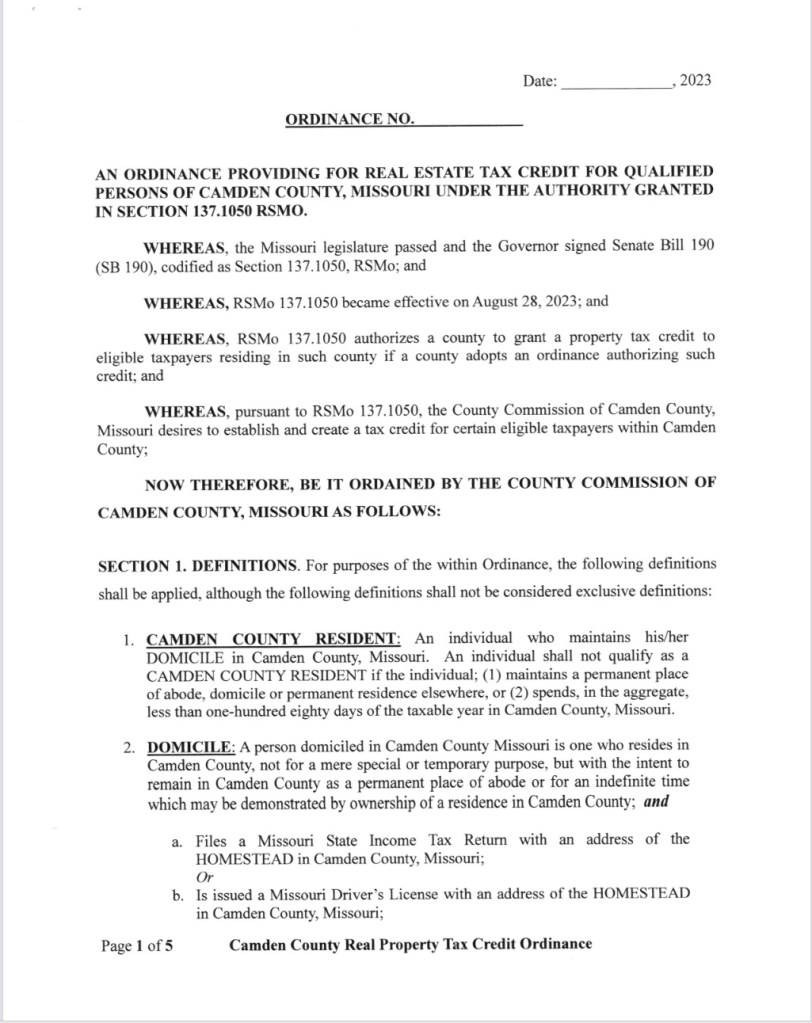
The second agenda item was Review Draft of SB190 Ordinance.
Presiding Commissioner Skelton stated that the ordinance would make Camden County the first Missouri county to enact SB190. (It turned out that Greene County might have passed one also, but their ordinance didn’t give the tax credit to teachers or other individuals who aren’t eligible for Social Security.)
Instead of waiting for the citizenry to put it on the ballot, the commission decided to take the initiative and pass it with an ordinance.
County Attorney Green drafted the ordinance and discussed his thoughts on the matter.
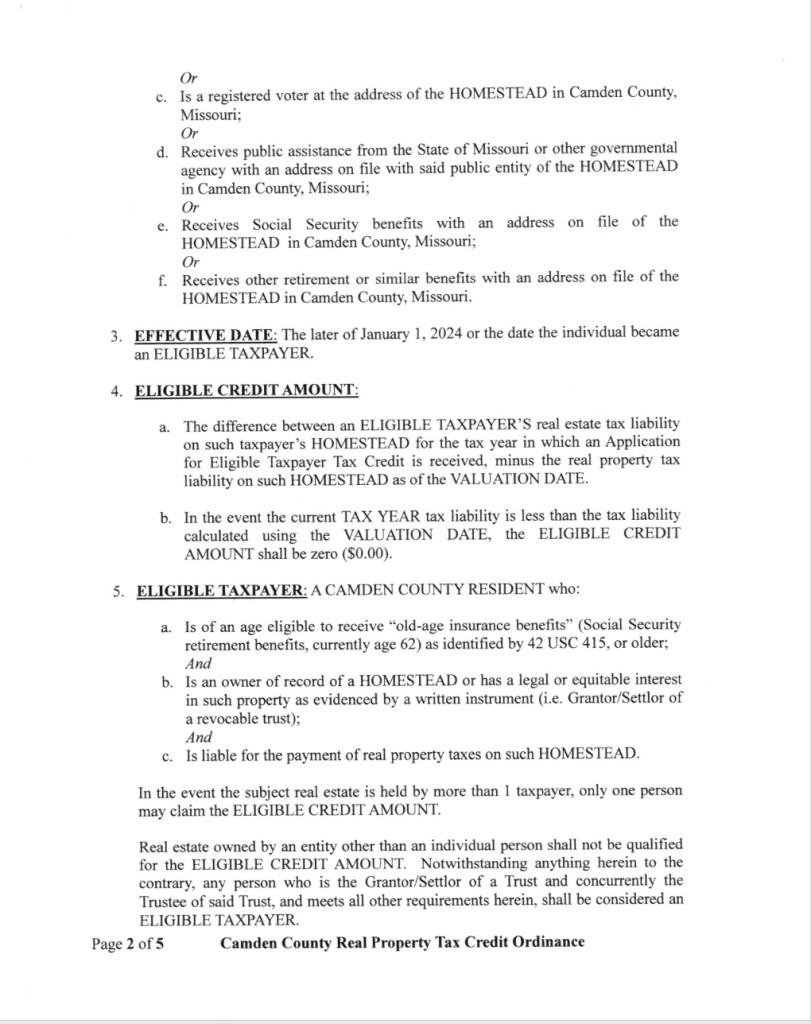
In Green’s opinion, the legislators’ intent was to freeze real estate taxes for senior citizens with a tax credit. There has been some confusion about the language used to describe who is eligible for this tax credit. The intent was for taxpayers 62 and older to receive the credit. The county’s ordinance sets the eligibility age at the age when the taxpayer is qualified for “old-age” Social Security benefits. This age is currently 62 years of age.
The county ordinance clarifies what qualifies as a primary residence. There are no income or asset qualifications, so a senior who owns a $3 million primary residence qualifies for the tax credit.
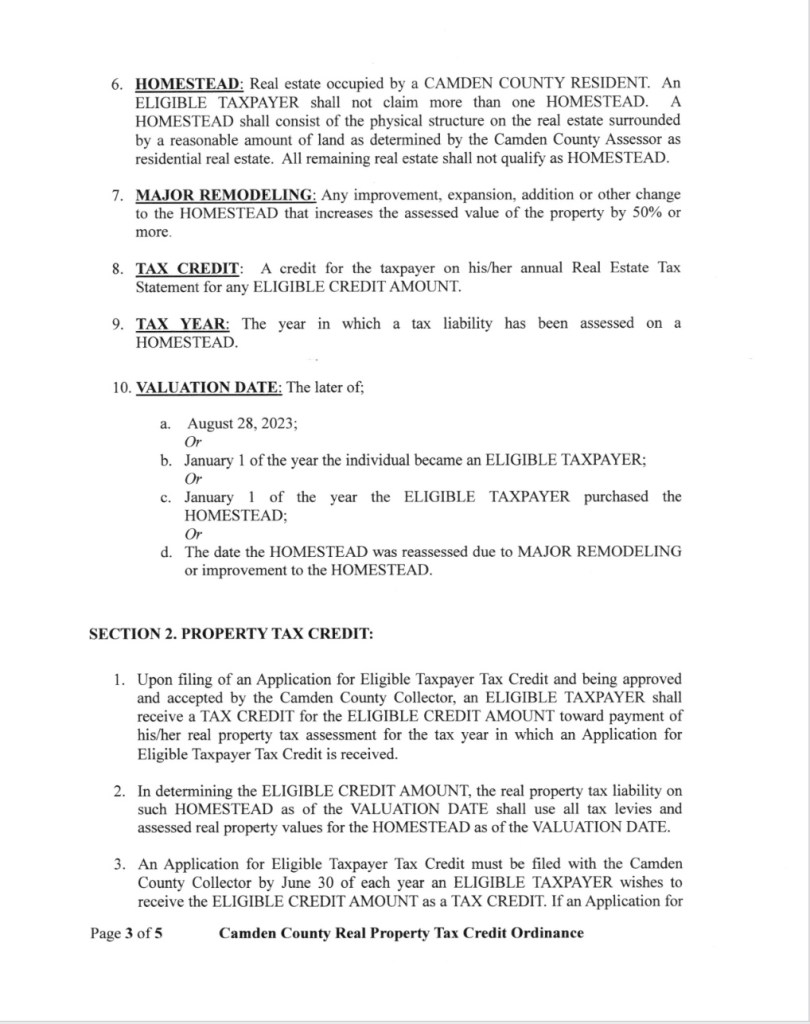
There were questions across the state about when the tax credit would take effect. This statute will become effective as of August 28, 2023 and the tax credits will not be calculated back to any period before that date. The ordinance itself will take effect on January 1, 2024 or the date the taxpayer becomes eligible for the tax credit (62 yo), whichever is later.
Only the real estate taxes are frozen. Not the assessments or the tax levy. Real estate taxes will be reassessed if the homeowner increases the value of their property by 50% or more by remodeling the property.
(So if you buy a tiny cabin, freeze the taxes, and then add 5,000 square feet and a pool to it, you’re going to be a disappointed taxpayer.)
Two scenarios were mentioned at the meeting that warrant some explanation.
Scenario #1:
A 76 year old and a 52 year old are married. They own the house together and their real estate taxes are frozen. If the 76 year old died, the real estate taxes would unfreeze and then rebound back to their current amount because the remaining owner is not old enough to qualify for the tax credit.
Scenario #2:
A 76 year old and a 66 year old are married. They own the house together and the taxes are frozen from the date the older owner became 62 years old. If the 76 year old died, the real estate taxes would be re-established based on the date the 66 year old became 62 years old.
The lesson to learn here? Treasure your elders. They are worth their weight in gold.
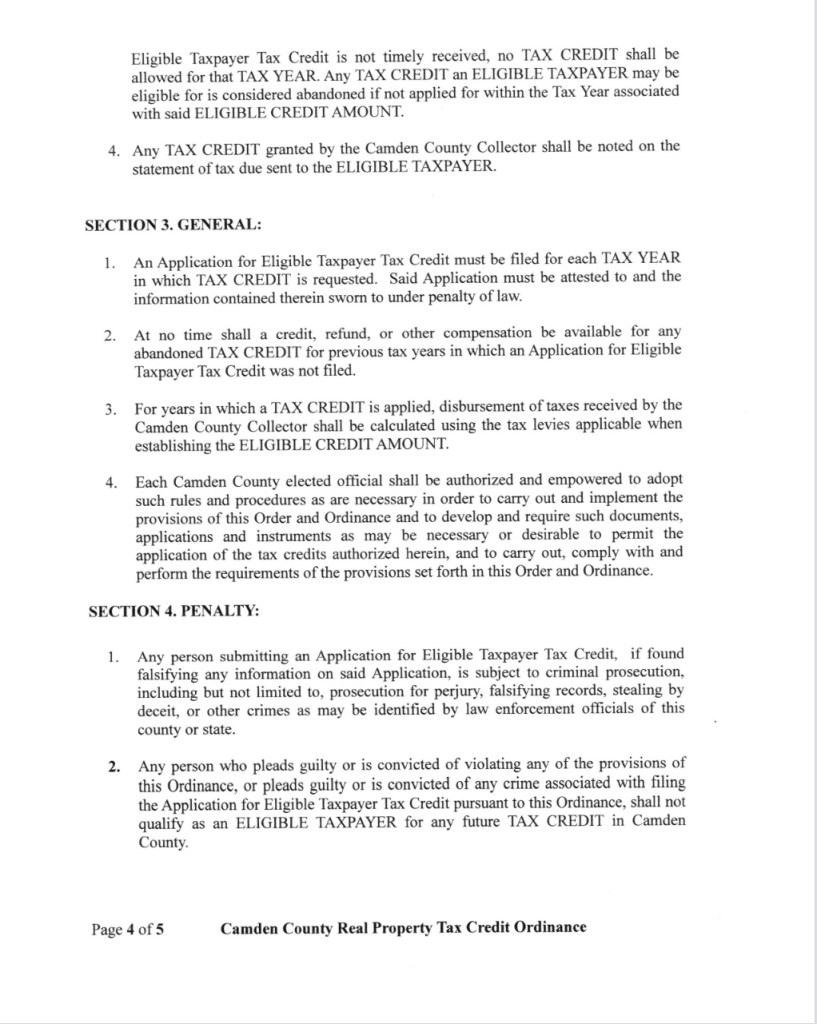
Taxpayers will have to apply for this tax credit with Camden County by the 30th of June every year. The first time people apply, there will be more paperwork required to establish the tax credit. In following years, the process should be easier to simply renew the tax credit with the county.
The ordinance also establishes criminal consequences for nefarious individuals who try to falsely claim this tax credit.
Overall, the audience (some admittedly older and likely to benefit) responded positively to the passing of the ordinance. There was one gentleman who expressed concern that the ordinance would affect the future property tax revenue for the county and those taxing entities that rely on property tax for their main revenue stream. I didn’t exactly hear him swear an oath that he would refuse to apply for the tax credit himself, but he was concerned about the impact it could have.
The Commission voted unanimously to adopt the Camden County Real Property Tax Credit Ordinance.
I’ve attached a copy of the signed ordinance below.
And that was that.
In other news, the Camden County tax sale collected a grand total of $521,904.29. That leaves just $7.5 million in delinquent property tax revenue floating around out there!
 Among the Dogwoods