The Gadfly attended the September 26, 2023, Camden County Commission meeting at 10:00 a.m.
All commissioners were present.

Right away, the Commission voted unanimously to strike agenda item #4 (R&B Budget Amendments) from the agenda. Presiding Commissioner Skelton explained that since money was going to be moved within the same fund and within the same department, no budget amendment was required.
The first agenda item was Bid Opening – Pros. Atty. – Grants Funds.
There was nobody present from the Prosecuting Attorney’s Office to talk about the bids.
There were two bids for a third party to provide administration of grant funds. Forvis bid $350 per hour to administer the grant. The Council of Local Governments bid $40,000. Presiding Commissioner Skelton mentioned that MU Extension had an opportunity to bid on this also, but they did not submit a bid before the deadline.
The Commission voted unanimously to table this item so the Prosecuting Attorney could review the bids.
The second agenda item was Bid Award – R&B – Hot Mix Asphalt Overlay.
These bids from the previous meeting had been reviewed by the Road and Bridge Administrator. There was a bid from Magruder and a bid from Capitol. The Capitol bid was $38,000 higher. The Commission did not have the bids with them and this item was tabled so Jordan, the Commission’s Administrative Assistant, could run over to the office and get them. Thank goodness for Jordan!
The third agenda item was R&B – 2023 Salt Bids – City of Osage Beach.
There were two bids. One bid from Central Salt LLC was for $80/ton. The other bid was from Compass Minerals America for $126/ton.
The Road and Bridge Administrator recommended that the Commission accept both bids so that Road and Bridge could use either vendor if necessary.
Both bids were approved unanimously by the Commission.
The commissioners also discussed the new salt dome that is going to built for Camden County by ClearSpan. This structure would allow Road and Bridge to buy salt in the summer when it’s cheaper and store it until the winter. The Horseshoe Bend Special Road District has been doing this for several years and it’s saved them some significant money.
Unfortunately, Presiding Commissioner Skelton said that ClearSpan estimated the wrong cost for iron worker salaries on their bid for the project. ClearSpan claimed that the prevailing wage salary information provided by the State of Missouri was incorrect. As a result, the cost of the project will increase by $11,500 more than what was bid.
The Commission voted unanimously to accept the new, higher bid amount for the project.
Jordan then came through the door with the hot mix asphalt bids. By my estimate, she probably broke the land speed record for running to the Commission Building and back. Didn’t even look like she broke a sweat.
The Road and Bridge Administrator told the Commission he recommended they accept the Magruder bid because the rate was cheaper. The roads that this bid will surface are Red Barn Road ($119,858), Turkey Bend ($117,000), and Runabout Drive ($136,000).
The Magruder bid was approved unanimously.
The final agenda item was Discuss Impact Fee Funds.
Presiding Commissioner Skelton talked with County Treasurer Kendra Hicks regarding where Camden County’s impact fees were being held. $700,000 was stored in two CD’s and $400,000 was held as cash. Skelton remarked that a portion of those impact fees were earmarked for Willow Creek Bridge so it made sense to keep that money invested for next year when it would be used for that project.
The commissioners then discussed changing the impact fee from a set impact fee to charging an impact fee that actually reflected the assessed damage done to a roadway by a particular project. They all agreed that the current impact fee system doesn’t accurately cover the costs required to repair roads damaged by construction.
County Attorney Green mentioned that there would probably need to be some kind of bonding requirements for projects to ensure that Camden County would be able to get the impact money ahead of time instead of having to file lawsuits every time they wanted a developer to pay for a road repair.
Presiding Commissioner Skelton wondered if it would make sense for the county to drop the impact fees altogether and instead slightly raise the property tax levy? Skelton explained that he was not eager to raise property taxes, but the money to fix the roads needed to come from somewhere.
(I’m not even sure how much the property levy could be raised without a ballot measure thanks to the Hancock Amendment and Camden County’s booming sales tax numbers. To refresh your memory, I wrote about how the levy works here.)
Commissioner Williams mentioned they needed to assess the roads before and after construction occurred.
Lee Schuman, a former Camden County Road and Bridge Administrator, was present at the meeting. He discussed some of his experiences with the impact fees. According to Schuman, before the impact fees were established by ordinance, Road and Bridge Administrator Gary Webster would go out to large development or excavation projects and ask them to put up a bond to cover potential road damage. That bond money would then be used to repair any road damage after the project was over and the remainder would be returned. Planning and Zoning was not involved in this procedure.
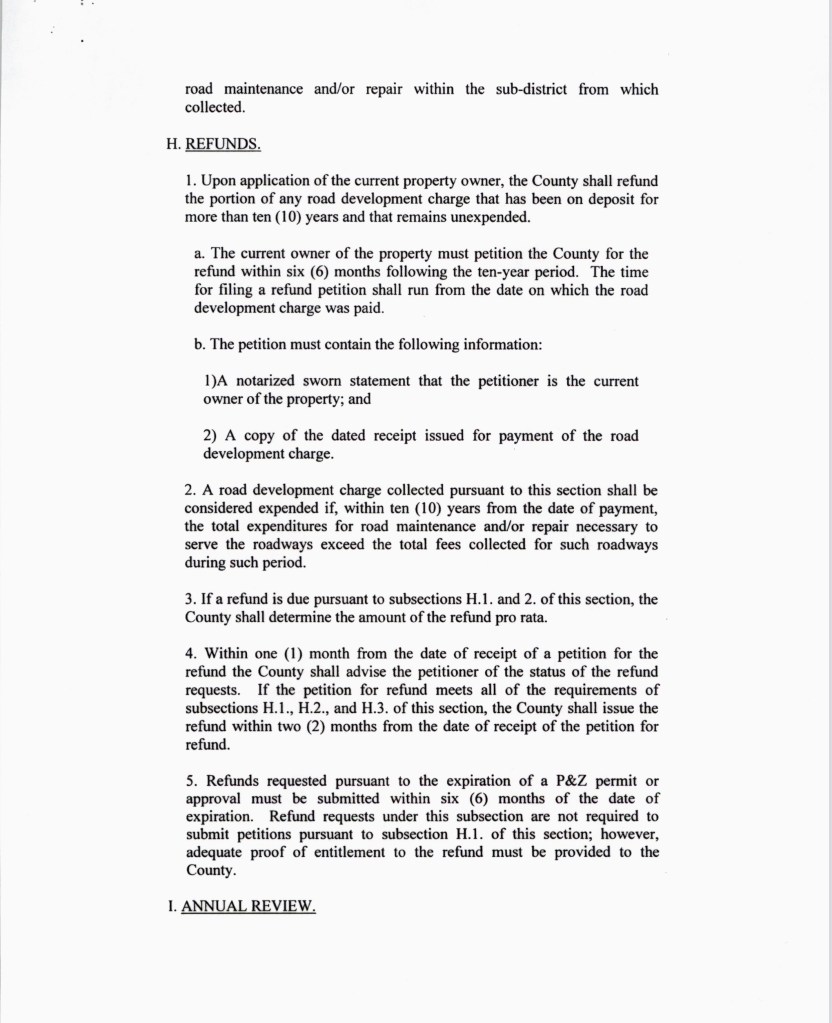
Schuman also mentioned that the current ordinance stated that people who paid impact fees can get their impact fees reimbursed if no repairs were performed on the impacted roads within 7 years of payment. This information is not listed anywhere on the Planning and Zoning permit.
And that was that.
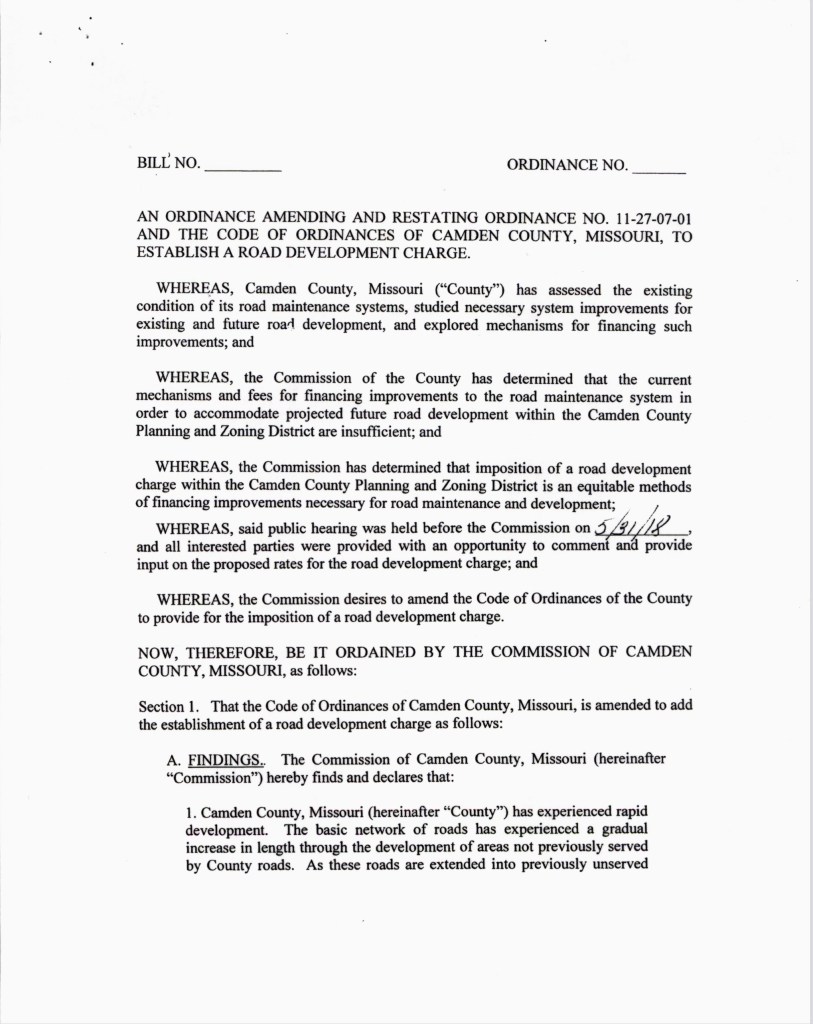
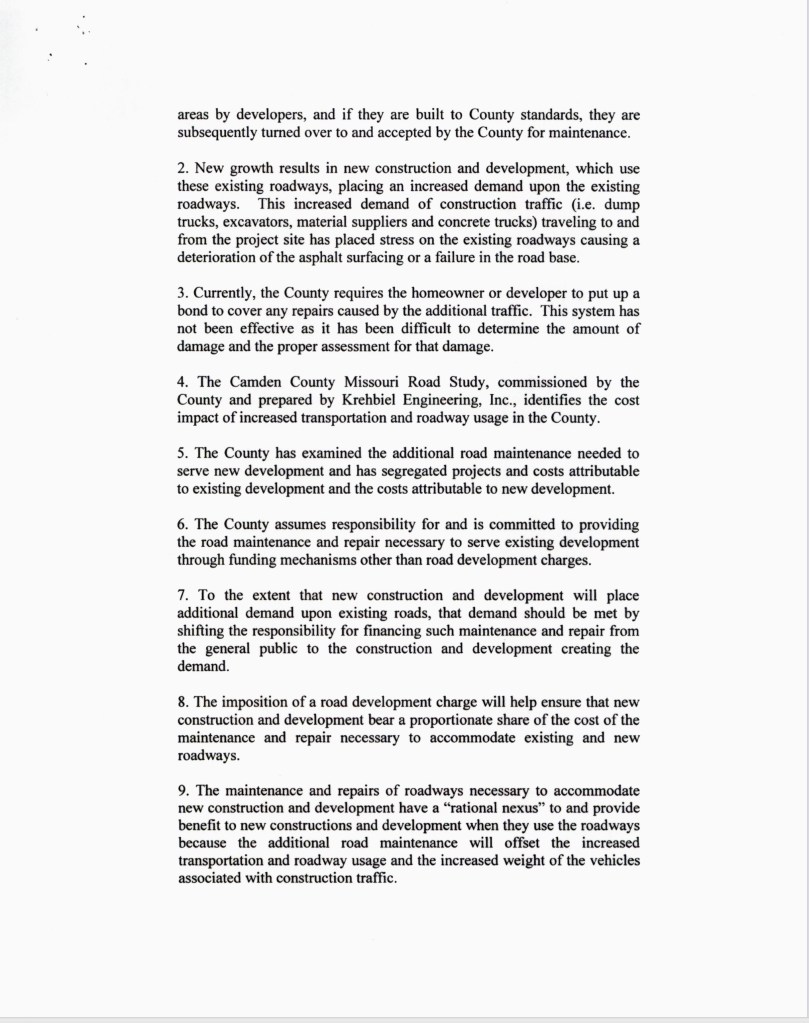
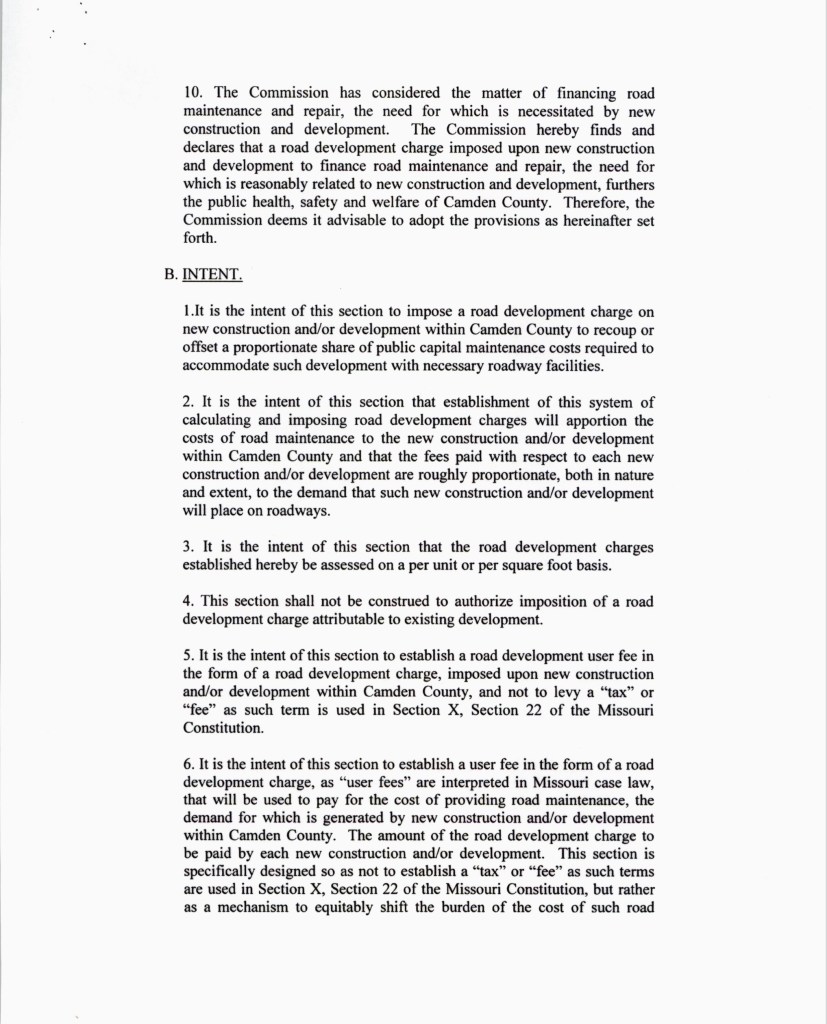
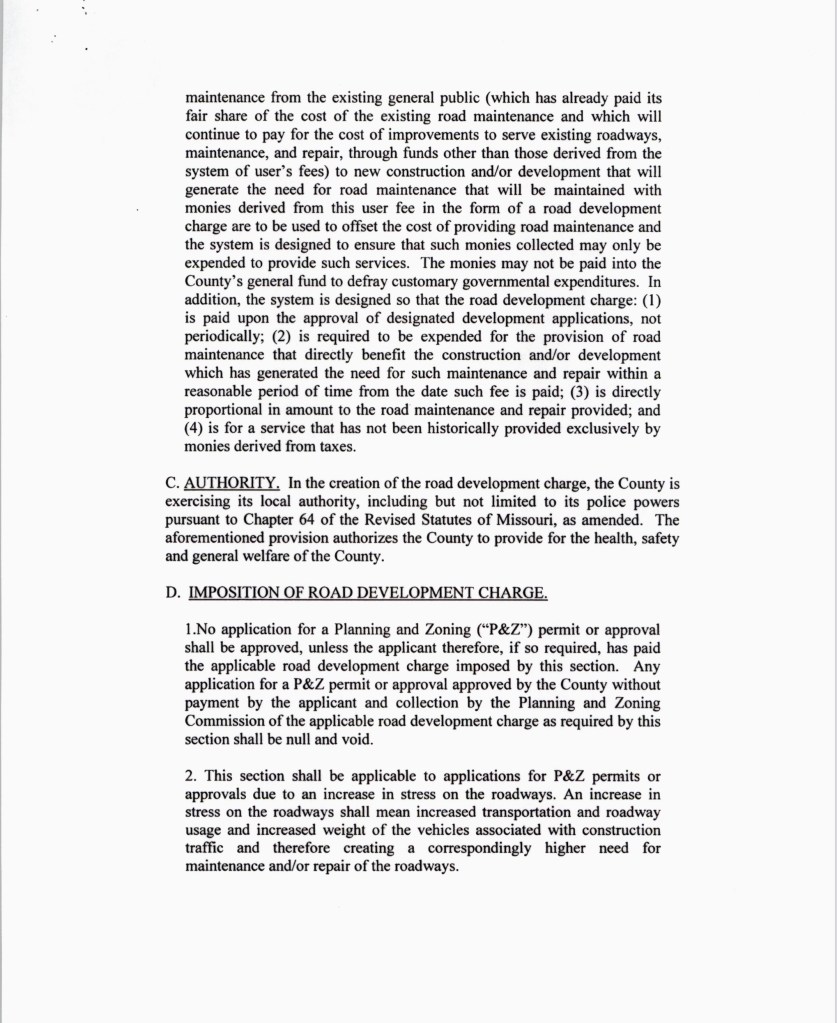
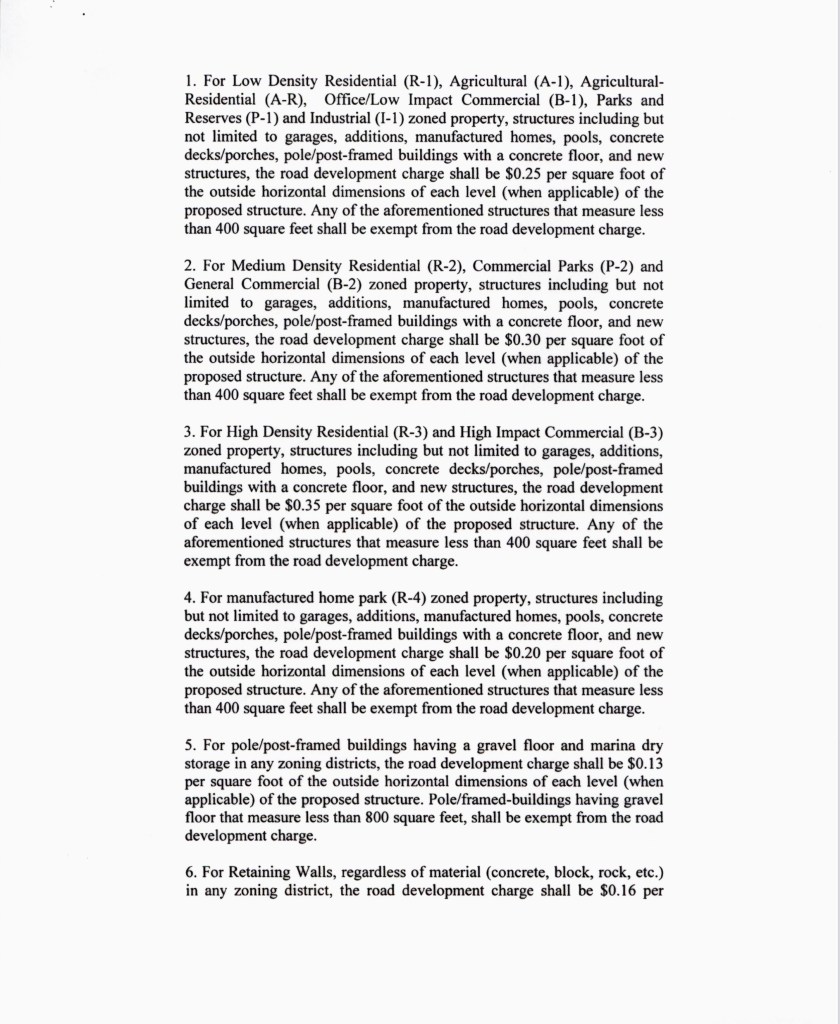
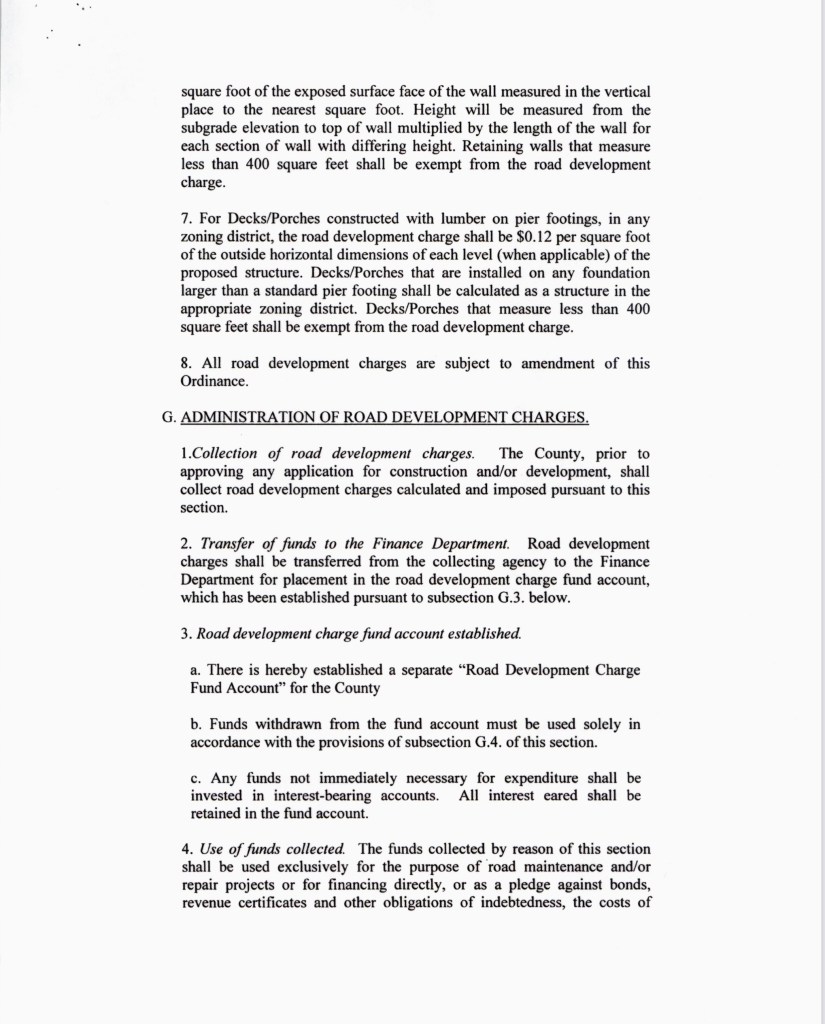
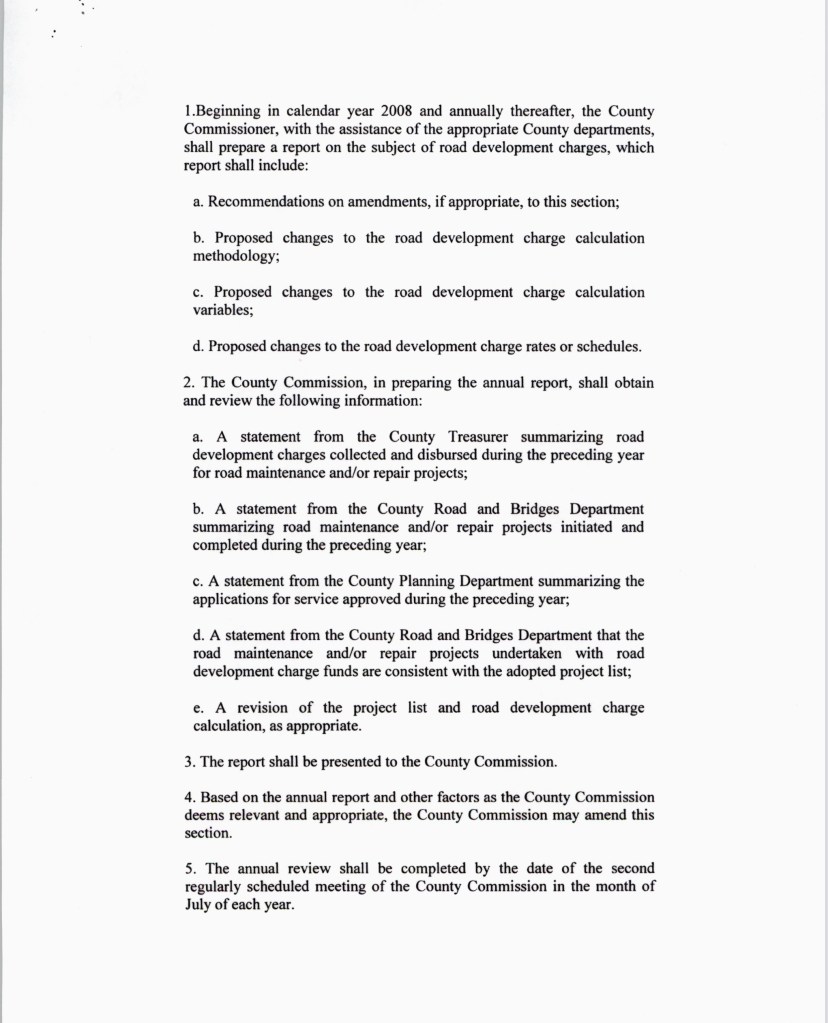
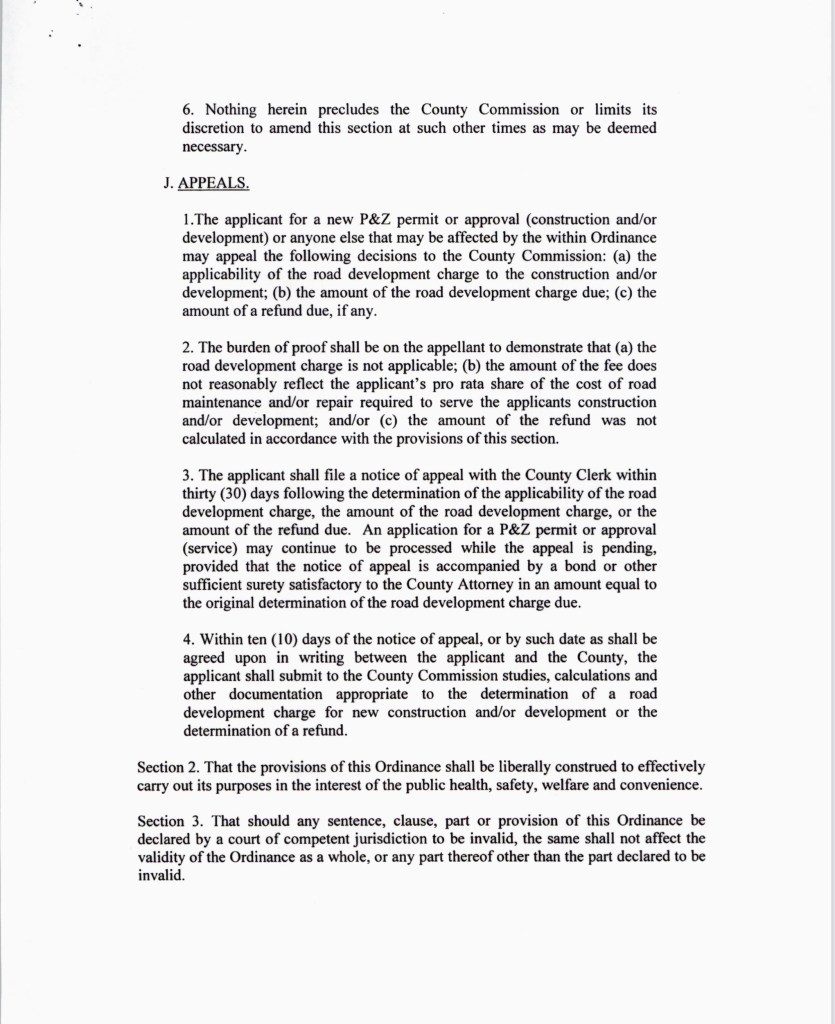
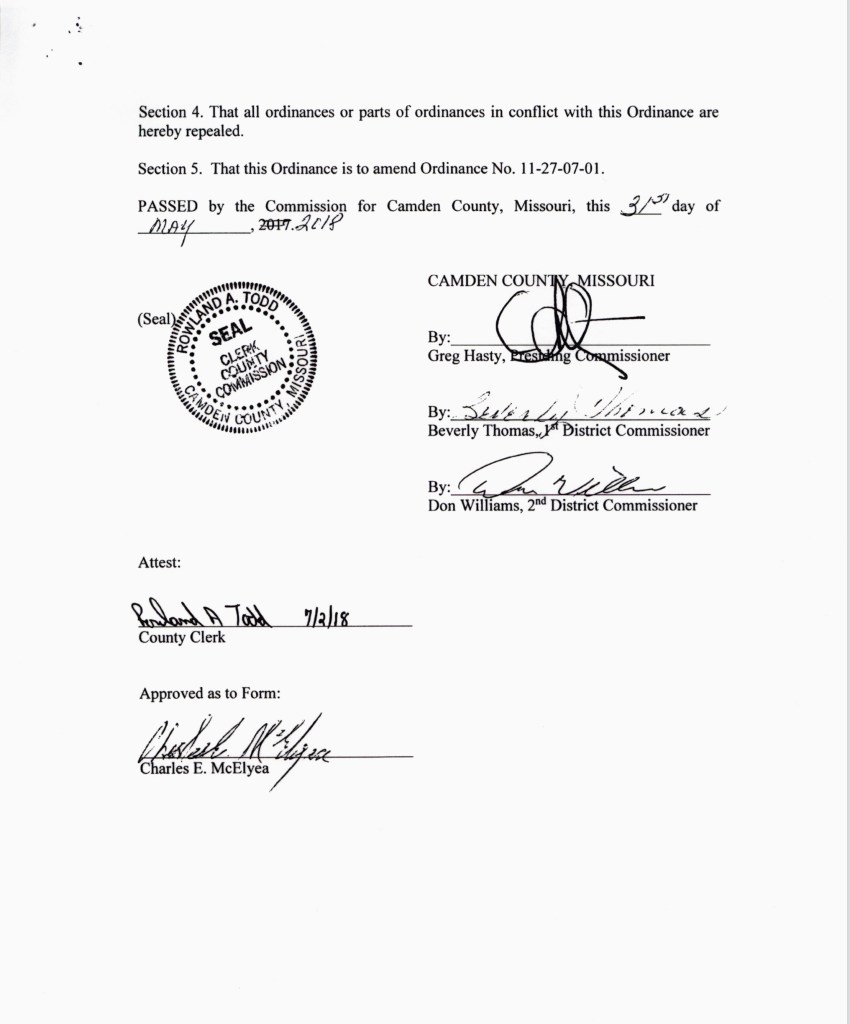
I have attached a copy of the Camden County Ordinance that amended the established Road Development Charge (road impact fee). It was signed on May 31, 2018, by Commissioners Greg Hasty, Beverly Thomas, and Don Williams, and is the current ordinance regulating the fees. It’s worth a read.
In this ordinance, the Commission claimed they were establishing a road impact fee because “it has been difficult to determine the amount of damage and the proper assessment for that damage.”
It sounds like we’ve officially come full circle on this issue.
The ordinance also established that the fees are required to be spent for road maintenance that benefits the area which generated the need for such maintenance.
It does not apply to construction within the Horseshoe Bend Special Road District.
The reimbursement period for unspent impact fees is 10 years.
The County Commission has to prepare an annual report on Road Development Charges in July of each year. Which lucky Commissioner is going to be put in charge of that homework assignment?

 Among the Dogwoods