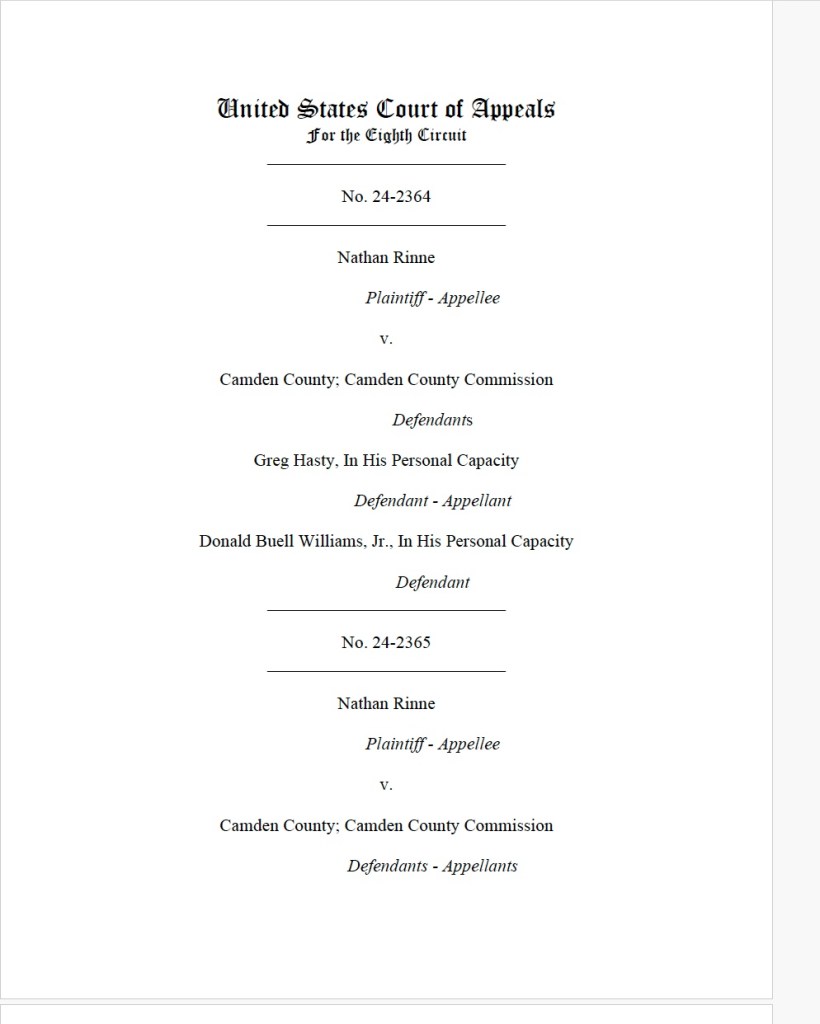
I figured I might provide a quick update on the federal lawsuit filed by Nathan Rinne against Camden County and two of its former commissioners: Nathan Rinne v. Camden County; Camden County Commission, Greg Hasty, and Donald Buell Williams, Jr.

For those who aren’t familiar with the facts of this lawsuit, I’ll recap with this brief summary from a previous article I wrote. I will also preface this by saying it’s no coincidence that every county official who had a hand in this is an ex-county official:
Commissioners Hasty and Williams banned Nathan Rinne from all Camden County property. After receiving the ban letter (not a trespass letter), Nathan went to the courthouse to vote and posted a public video to Facebook of himself walking out of the building after voting.
Michael Hutzler, a former detective for the Camden County Prosecuting Attorney’s Office, then wrote a search warrant for all of the contents of Nathan’s Facebook account including his private messages. The justification for the search warrant was that it would prove that Nathan had trespassed on county property. The search warrant instructed Facebook not to notify Nathan about the search warrant. No Camden County judge would sign the search warrant so the detective took it to a Laclede County judge who signed it.
Meanwhile, Nathan filed a federal lawsuit against the county for a violation of his civil rights. Only after he filed the lawsuit did Rinne become aware that the county was reading his Facebook messages.
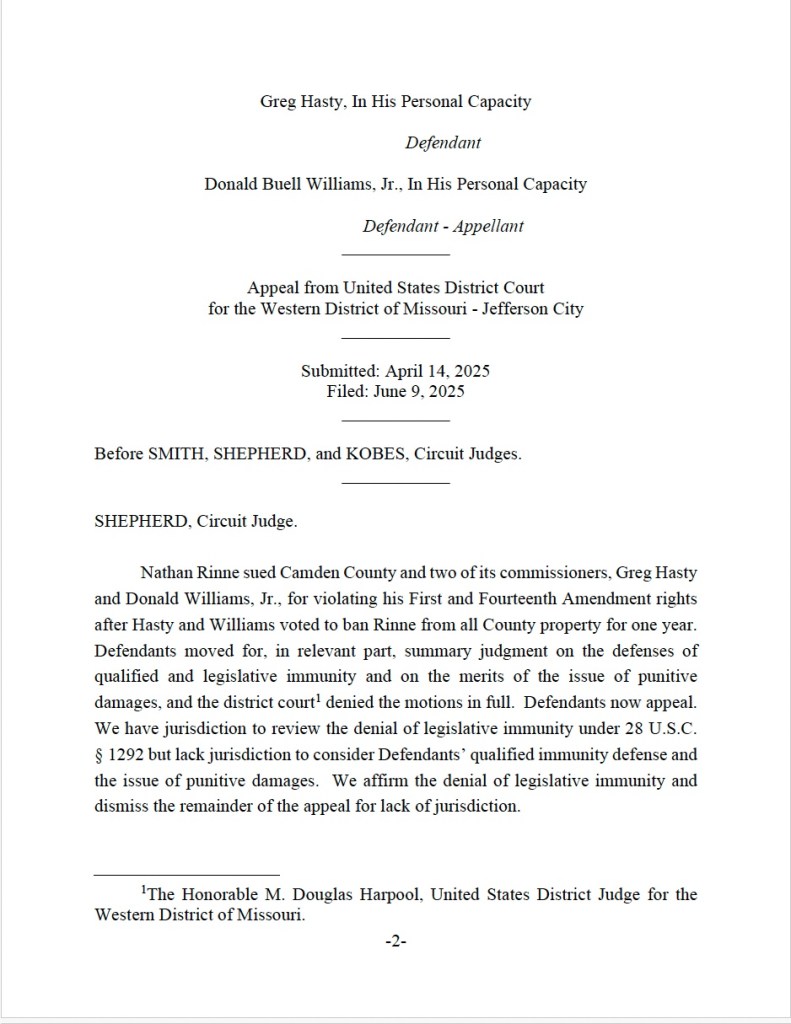
Judge Harpool, a federal judge, issued a preliminary injunction against Camden County and both Hasty and Williams were denied qualified immunity. In a final, desperate attempt to stave off a trial, the defendants appealed Harpool’s rulings for a second time to the 8th Circuit.
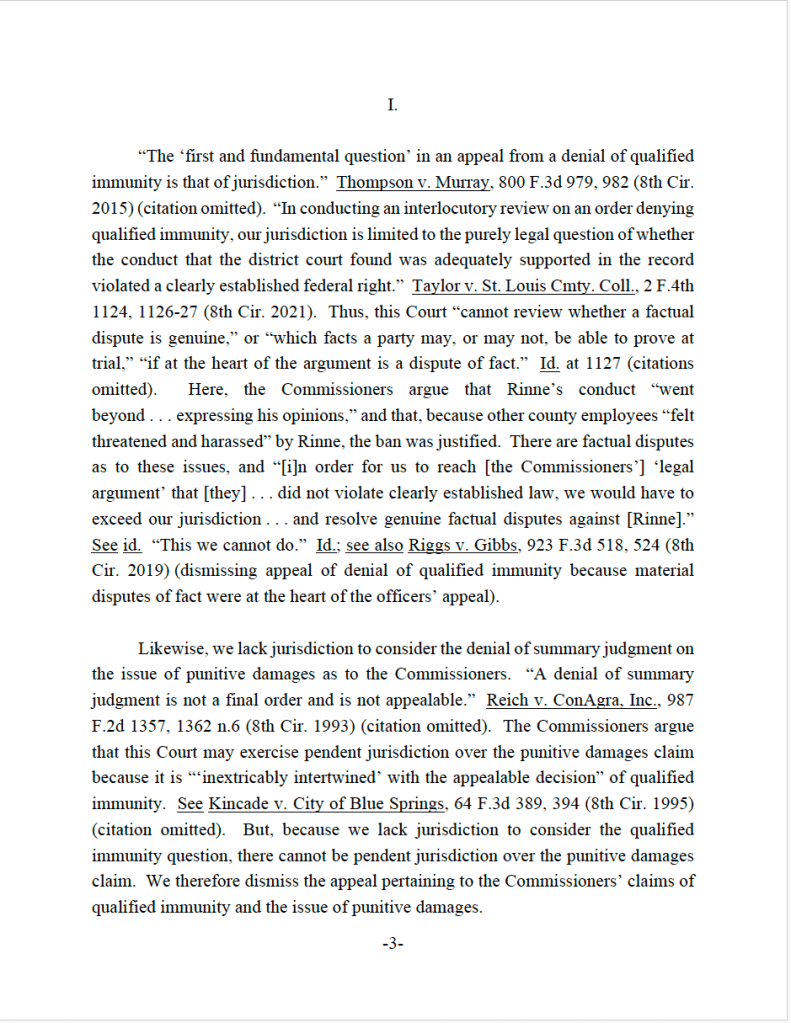
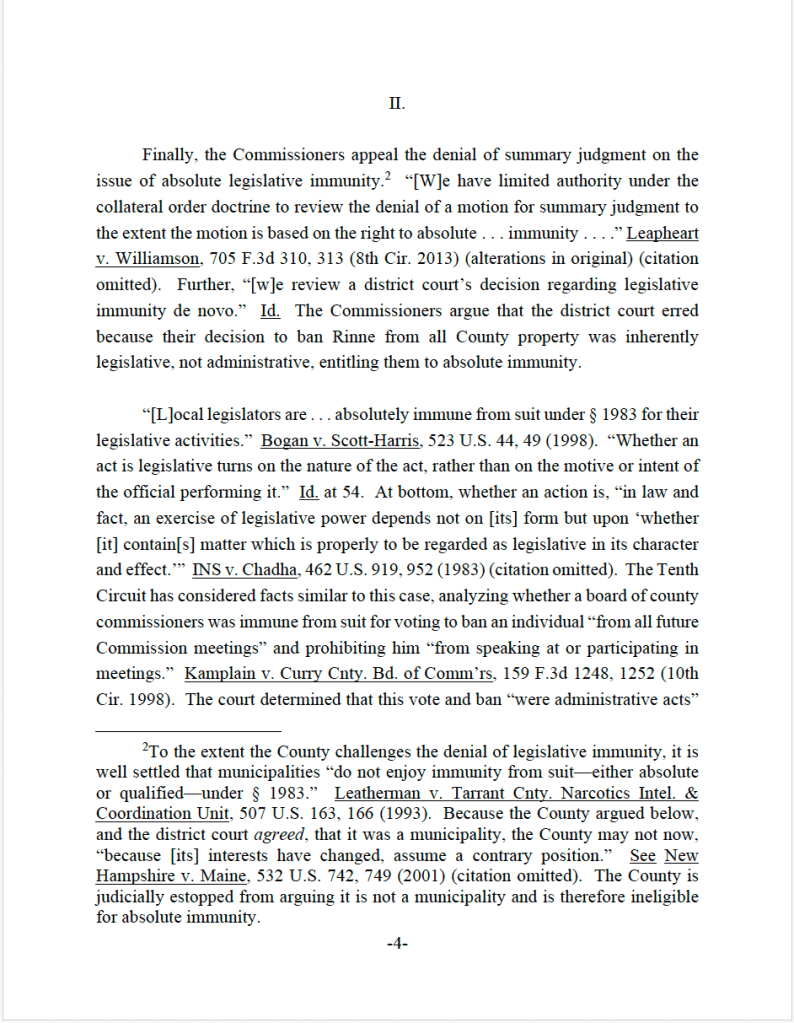
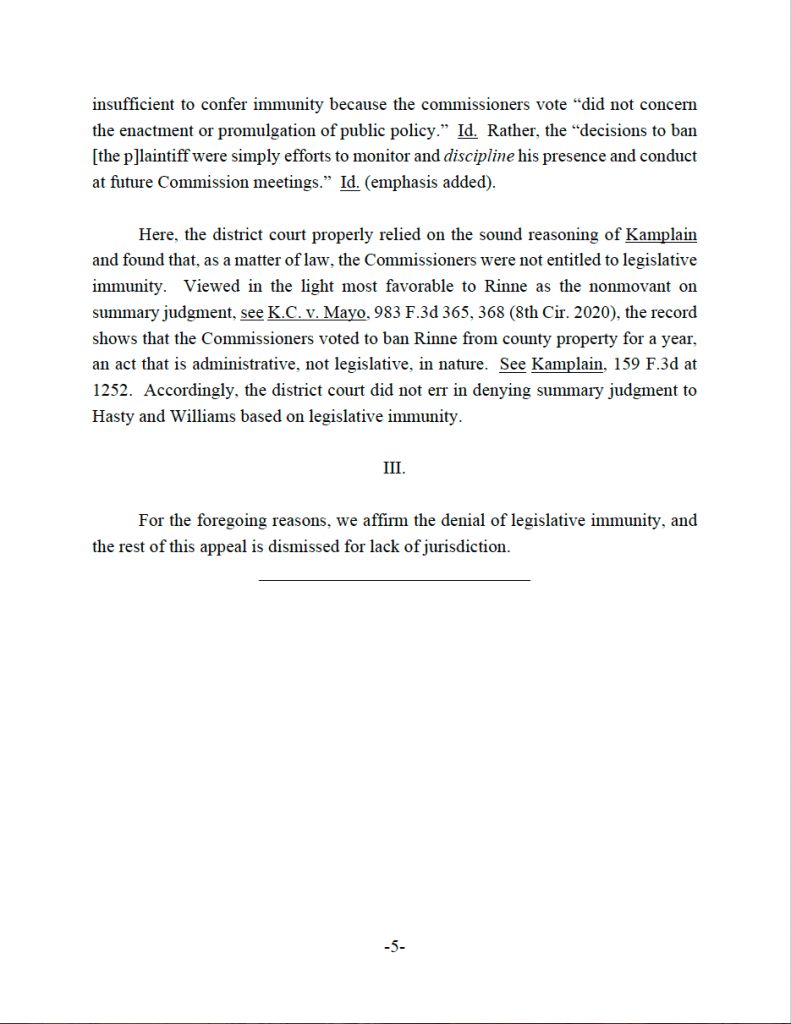
The 8th Circuit filed its decision on June 9, 2025 affirming the denial of legislative immunity and dismissing the remainder of the appeal because they do not have the jurisdiction to consider the defendants’ qualified immunity defense and the issue of punitive damages. The appellate court determined that the decision to ban Rinne was an administrative act, not a legislative act, so legislative immunity should not apply.
The prevailing winds of current case law are not blowing in favor of Camden County. More and more often, the courts are ruling against government authorities who use their power to suppress protected speech. The case law is starting to stack up.

Incredibly, Hooterville recently had another 1st Amendment violation lawsuit sent back to the 8th Circuit by SCOTUS as the Supreme Court denied a former Sunrise Beach police officer qualified immunity.
So now we shall see what happens as the defendants face their day in Judge Harpool’s courtroom that they have avoided for so long. They will not have qualified immunity and can be subject to punitive damages. All we can do is hope that it’s not the county’s purse that gets punished.
 Among the Dogwoods