I attended the March 17, 2026, Camden County Commission meeting at 10:00 a.m.
All commissioners were present.
The first agenda item was “Marijuana Tax Revenue Payout.”
The Missouri Department of Revenue has asked Camden County to return $159,002.46 in marijuana sales tax that was collected by the county from marijuana sales that occurred in municipalities.
Presiding Commissioner Skelton suggested the requested amount be returned from the Marijuana revenue line item that is in Fund 2 (the Road and Bridge budget.) The county collected a total of $692,747.
County Auditor Jimmy Laughlin suggested returning all of the tax money to DOR.
Presiding Commissioner Skelton preferred to wait until the tax money was requested by DOR. The County Treasurer concurred with Skelton. She felt she would have no trouble keeping track of the revenue retained by the county.
The Commission voted unanimously to return $159,002.46 to DOR as requested.
(I assume we can be assured that this tax revenue will then be returned to the dispensaries by DOR. And that the dispensaries will then return the taxes to those customers who paid them. Fingers crossed.)
The second agenda item was “Release of Closed Session Minutes.”
Presiding Commissioner Skelton stated that the minutes were from closed sessions in 2022 and 2023. Skelton assured the audience there was nothing “shocking” in the minutes.
In Public Comment, Prosecuting Attorney Richelle Grosvenor addressed the Commission.
Grosvenor was complimentary about the majority of the Camden County Sheriff’s deputies, but explained that she has been dealing with issues involving a few specific employees.
She stated that the problems began when she received a call from a defense attorney regarding a video of a Camden County deputy that he considered “disturbing.” After that incident, her office began to carefully review the videos from Camden County Sheriff cases. This review revealed that the Probable Cause Statements sometimes did not match the evidence that her office received for those cases. Based on this, Grosvenor implemented a policy of reviewing the video before filing charges, especially when certain law enforcement employees were involved.
Her office then began to get calls from victims who were angry and claimed the prosecutors weren’t doing their jobs. When the prosecutors checked those names in their files, they realized they didn’t have any records of those cases. The victims stated that the Sheriff’s Office was telling them the prosecutors weren’t doing anything with their cases, but the prosecutors did not have any referral from the Sheriff’s Office for their incident.
Grosvenor identified a specific detective at the Sheriff’s Office who handles “kid cases”, burglaries, and thefts. Her office began to have problems with this specific detective during criminal depositions.
Grosvenor read aloud from two depositions wherein the detective admitted to losing evidence and mismanaging evidence. She also described an additional case where the detective described evidence in her office that he later admitted didn’t exist.
Grosvenor explained that her office has the ability to prosecute these cases, but not if they don’t get what they need from the Sheriff’s Office and particularly, this detective. This detective was aware that she had issues regarding his credibility.
The detective then asked for a meeting with Grosvenor about these issues in a request that he wrote on Sheriff’s Office letterhead, came to that meeting with the Prosecuting Attorney in her office, and secretly recorded that conversation. Grosvenor stressed that it should have been obvious that such a conversation would have included a discussion of trial strategy. She asserted that he should have known that he was a witness in the case and was creating a recorded statement.
Her office only discovered that this recording had been made when, several days later, another deputy secretly recorded another of her prosecutors at a meeting at the Sheriff’s Office. That prosecutor asked the deputy if he was recording and he admitted that he was. That prosecutor then asked the detective from the earlier meeting if he had recorded the prosecutors when they were in Grosvenor’s office and he admitted that he had. That prosecutor informed both of the deputies that the recordings were now evidence and they had to be turned over as discovery.
Grosvenor was concerned that these recordings were a severe breach of trust between the two offices. She wanted her office re-keyed and a system installed that would let her know if anyone entered her offices when her employees weren’t there.
Presiding Commissioner Skelton told Grosvenor he would be happy to come to her office and make an assessment of her physical security needs.
Presiding Commissioner Skelton asked Grovesnor if she knew of any physical breach of the security of her office? The Sheriff stated that there had been no such breach, but she replied that she wouldn’t know if there had been one.
Commissioner Dougan asked Grovesnor if her employees were feeling unsafe? He wanted to make sure that they felt safe in their workplace.
Presiding Commissioner Skelton wondered if Grosvenor might be satisfied with an audit trail of who gained entrance to her offices? Captain Kobel from the Sheriff’s Office explained that any audit information can be recovered from the company that runs the servers with a phone call request.
Skelton agreed to take a look at her offices and then they could come to a decision to improve her security that should satisfy her.
And that was that.
So let’s talk about what has happened.
What I’m going to discuss here are the facts that have been provided by the involved parties mentioned above and the sworn testimony that was given at a court hearing in Judge Hardwick’s court on March 6, 2026. The case number is 22CM-CR00765-01. As a disclaimer, I have not heard the contents of either recording. I’ve only heard the testimony about some of what was discussed.
A little background on myself for those who don’t know me. I was a law enforcement officer for 28 years before I retired. I worked patrol for the Los Angeles Police Department and the Ventura Police Department, but I spent the majority of my career as an investigator assigned to the Bureau of Investigation at the Los Angeles District Attorney’s Office. The Bureau has approximately 300 investigators and, for the last 10 years of my career, I supervised investigative units as a DA Sergeant and investigative sections as a DA Lieutenant.
The facts are that a detective from the Camden County Sheriff’s Office contacted the Prosecuting Attorney and asked for a meeting to discuss issues that she had with his investigative work. He sent this request in written form on Sheriff’s Office letterhead. The Prosecuting Attorney agreed to meet with him in her office. Under oath, the detective said that he was off duty when he went to the meeting.
Whether we think he was “on the clock” for this meeting is simply irrelevant. He was obviously given an opportunity to meet with the Prosecuting Attorney and discuss criminal cases because he is a detective. The Prosecuting Attorney is not going to meet with and discuss investigative work with someone who is not law enforcement.
The detective met with the Prosecuting Attorney and one of her prosecutors. While they were talking, the conversation turned to a discussion of the Lange case. This is a Statutory Rape and Statutory Sodomy case that the detective worked on and was pending trial. The Prosecuting Attorney pointed out problems with the investigation, including the detective’s failure to write a supplemental report for a second interview of the defendant, a recording of that interview that was missing, and a missing diagram that the detective had the defendant draw that was relevant to the offense. At the March 6, 2026, hearing, the detective admitted under oath that he had not been able to locate any of this evidence.
Both prosecutors were unaware that the detective was secretly recording their meeting and conversation.
In police work, we call this a surreptitious recording, which is a fancy way of making it clear that one party in the conversation was not aware the other party was recording it. Missouri is a one-party state, so, as far as I can tell, it was not illegal for the detective to record them without their knowledge.
However, I’m not exaggerating when I tell you that I have never, ever heard of any police officer or detective ever, EVER recording a prosecutor without their knowledge. I’ve checked with police chiefs, senior prosecutors, and former co-workers across the country and nobody has ever heard of this happening. And you might agree or disagree that it is improper or unethical to record a prosecutor, but I’m going to tell you the actual reason why this is one of the stupidest things an officer could do.
Police officers make arrests based on probable cause. Probable cause means that the facts and circumstances available to the officer would lead a reasonable person to believe a crime has been committed and that a specific person committed that crime
Prosecutors have a much higher standard. They have to believe that they can prove guilt beyond a reasonable doubt at trial. Since this standard is much higher, it is not unusual for officers to make legal arrests based on their evidence, but then discover that the suspect was released because there was not enough evidence to establish guilt beyond a reasonable doubt. There can be a variety of factors that contribute to this gap between arrest and prosecution: improper evidence handling, reluctant witnesses, statements that are inadmissible because of Miranda violations, etc.
We called these cases “DA Rejects.” It was not unusual for a detective to meet with a prosecutor after a release and discuss what further investigation needed to occur to make the evidence in the case stronger so the suspect could be charged with a crime. The prosecutor would lay out the problems with the case or request more evidence to reach that higher standard.
What you would NOT do after a meeting like this would be to go back to your office and write a report documenting everything that the prosecutor said was wrong with your investigation. By writing such a report, you are creating a document that would most likely have to be turned over to the defense in discovery. This report would map out all of the problems as described by the prosecutor.
And what you REALLY would not want to do is record a meeting like this because now you have basically created a “super-report” that has the prosecutor describing all of the problems with the case in their own voice.
This is even worse when, as is the case here, the detective is going into the meeting knowing that the prosecuting attorney is most likely going to explain the issues she has had with his investigations. And when they began to discuss the Lange case, this now meant that if it wasn’t discoverable before, this recording was now relevant to the Lange case.
During a criminal trial, it doesn’t always look good to beat up on a victim. It’s often the case that one of the best strategies for a defense attorney is to try and discredit the police and/or the investigation they conducted. By questioning the detective or officer’s integrity or competence, the defense can raise doubts in a juror’s mind regarding the validity of their conclusions or the quality of their evidence.
Here we have a detective who recorded a private conversation about the Lange case wherein the prosecuting attorney was questioning how the investigation was conducted. In effect, by recording this, the detective has created his own impeachment career suicide bomb. It’s conceivable that this recording could be presented as impeachment evidence to question his credibility and make him sound unreliable in every case he investigated that goes to trial and every case he handles in the future. I’m basing this only on the three examples that were mentioned at the hearing. I have no idea how many other examples were discussed in the total recording.
He really should go to whoever suggested he make this recording and punch them in the face.
Anyway, back to the facts. The detective left the meeting and did not book this surreptitious recording into evidence. In fact, you’re not going to believe this, but he gave the recording to his Fraternal Order of Police attorney. I’m serious.
Fast forward a few days and the Prosecuting Attorney’s Office was still unaware that they had been recorded. There was a meeting at the Sheriff’s Office for a case review that was attended by the detective, a deputy, a Major from the Sheriff’s Office, a prosecutor, and an investigator from the Prosecuting Attorney’s Office. The prosecutor had been present during the first recorded meeting, had a weird feeling about the meeting, and asked the Sheriff employees if they were recording them? The Major admitted he was recording them with a recording device in his pocket. The prosecutor then asked the detective if he had recorded the Prosecuting Attorney and himself at their previous meeting? The detective admitted that he had recorded them at that earlier meeting. The prosecutor immediately informed the deputies that those recordings were evidence and his office needed copies of the recordings.
If there is one bright point in this whole sad tale, at least the guys were honest enough to admit that they had recorded the prosecutors.
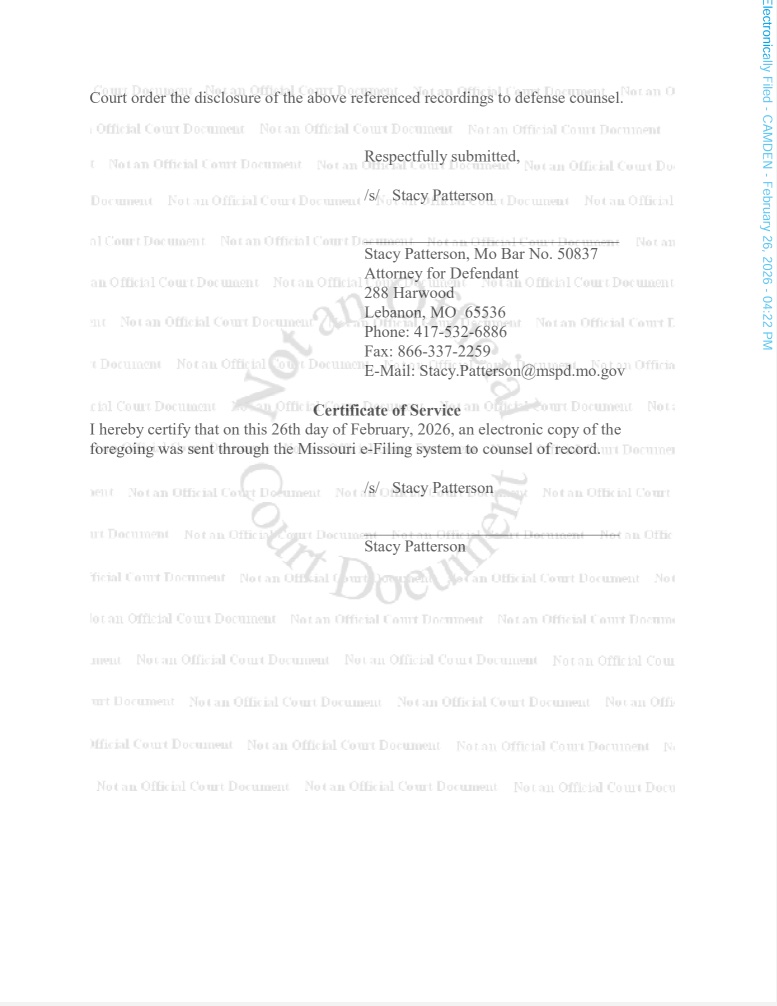
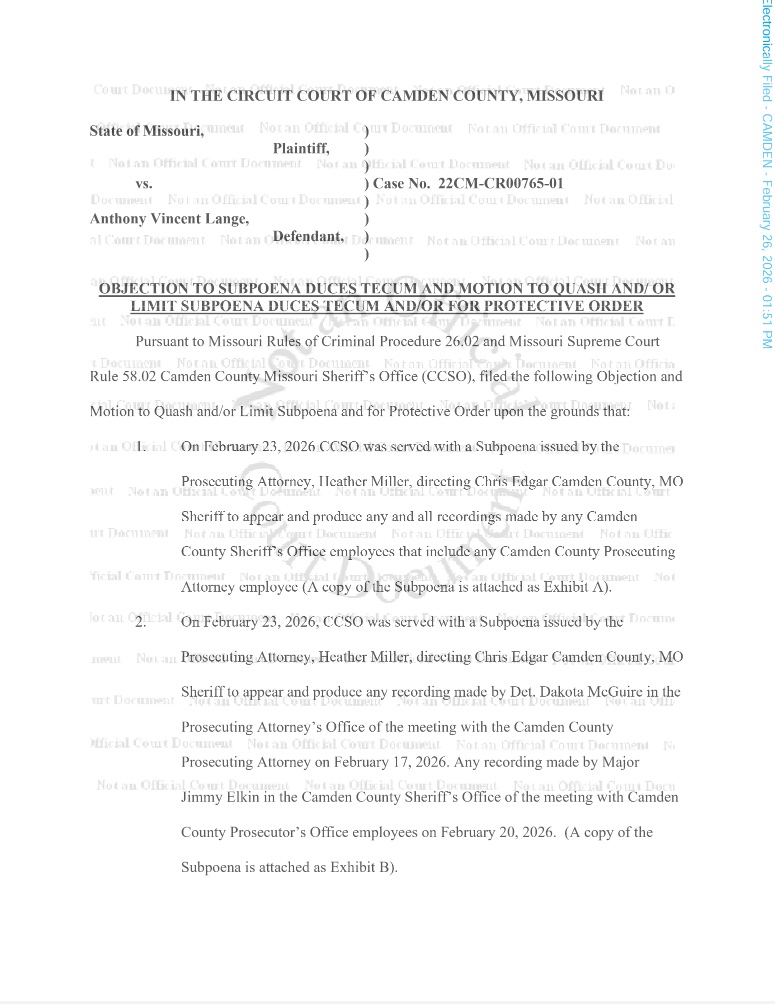
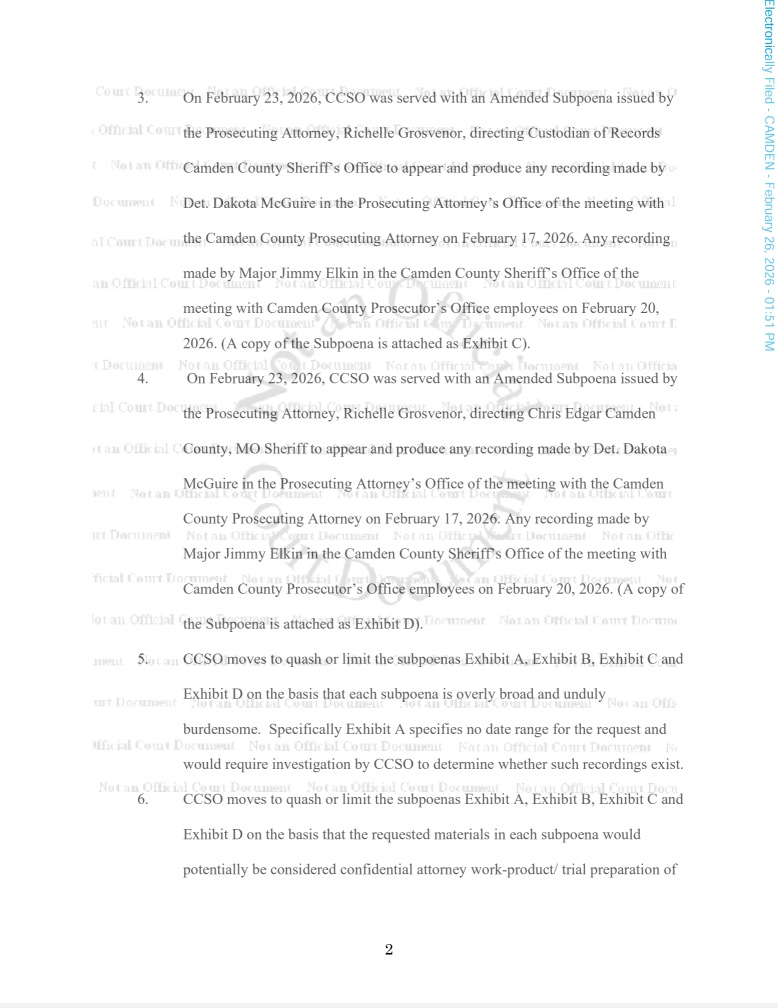
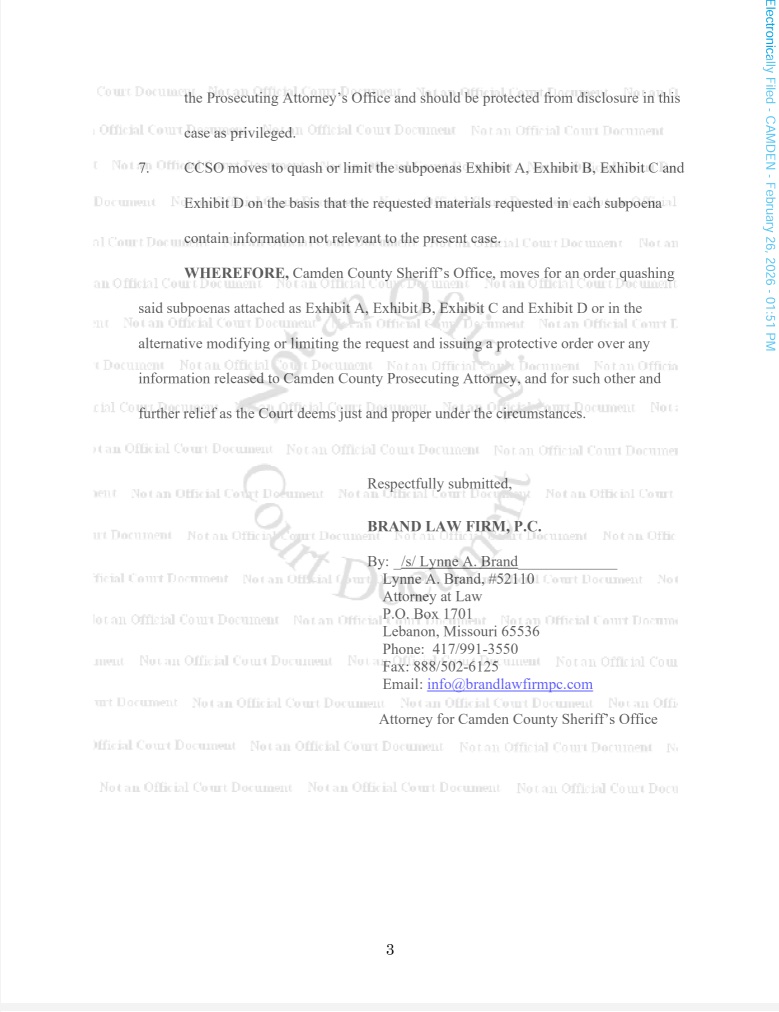
The Prosecuting Attorney’s Office then issued a subpoena to the Sheriff’s Office for the two known recordings and any other recordings of employees from their office. The Public Defender was notified about the recording regarding the Lange case and filed a Motion to Compel (probably after buying a round of drinks for her fellow defense attorneys and purchasing ten lottery tickets.) The attorney for the Sheriff’s Office filed a Motion to Quash or Limit the subpoenas where she made the hilarious argument that the recordings were privileged confidential attorney work-product/trial preparation on behalf of a Prosecuting Attorney’s Office that was trying to turn them over to the defense.
The detective, the Major, and the Sheriff all testified. The judge ruled that the general recording portion of the subpoena was overly broad. By the time of the hearing, the Sheriff’s Office was willing to turn over the one recording it had. I assume the Fraternal Order of Police Attorney removed the recording from his certified secure evidence facility in his law office and was also ready to turn it over.
Both employees testified that they were not ordered to make the surreptitious recordings by their chain of command. They apparently both decided for the first time ever to secretly record the Prosecuting Attorney’s Office within three days of each other by some strange twist of fate and extreme coincidence. Serendipity.
The Sheriff testified that he first found out about the recordings when the Prosecuting Attorney called him to complain about them. He had his supervisors talk to the other Sheriff employees to find out if there were any other secret recordings. They told the Sheriff there were no other secret recordings. He did state that he had never spoken to either of the employees about the recordings from February 20 (the date he found out about the recordings) to March 6 (the date of the hearing).
It’s important to point out that it will be argued in every single case this detective investigates that the jury should hear (in excruciating detail) everything that may have been discussed on the recording about his job performance. The recording will have to be given to every defense attorney so they can listen to the recording in order to make their arguments regarding whether its content is exculpatory or not. The existence of this recording also ensures that any criminal defense attorney worth their salt will insist on taking any case the detective handles to trial so the jury can listen to the recording.
And I do feel bad for the detective because it sounds like this was either some terrible decision-making on his part or, more likely, some atrocious advice he was given. I still believe in my profession and I have faith that most people put on that badge for the right reasons, but something like this can’t just be swept under the rug or minimized when it really was such an extraordinary error in judgement.
And here is the Motion to Compel:
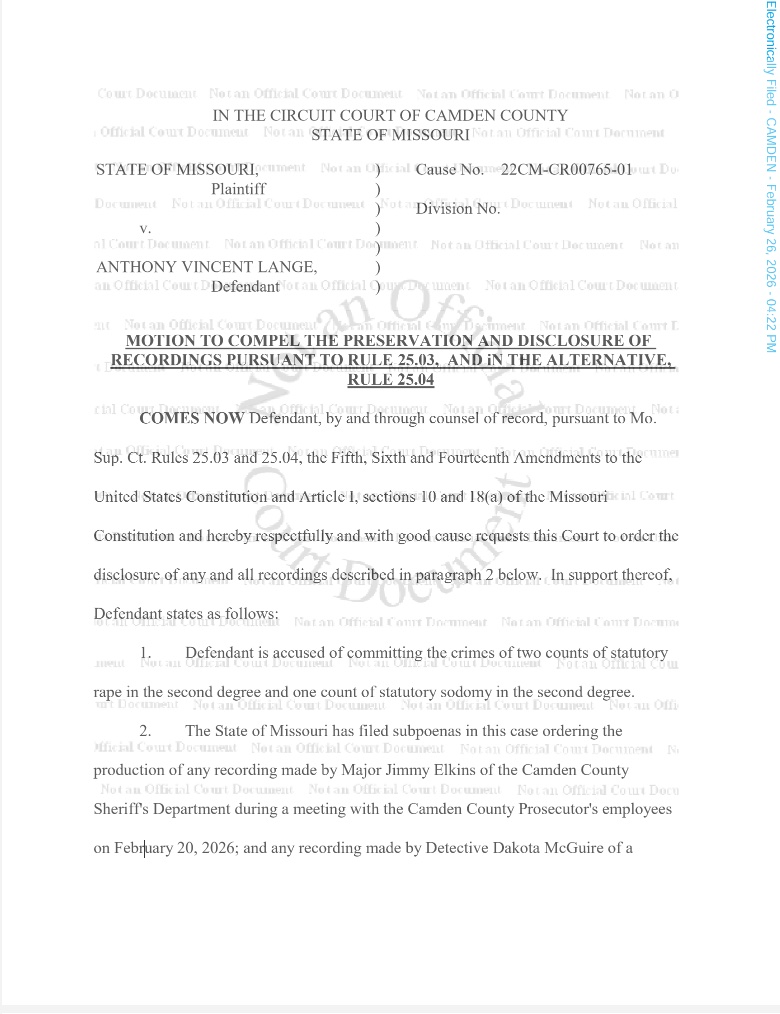
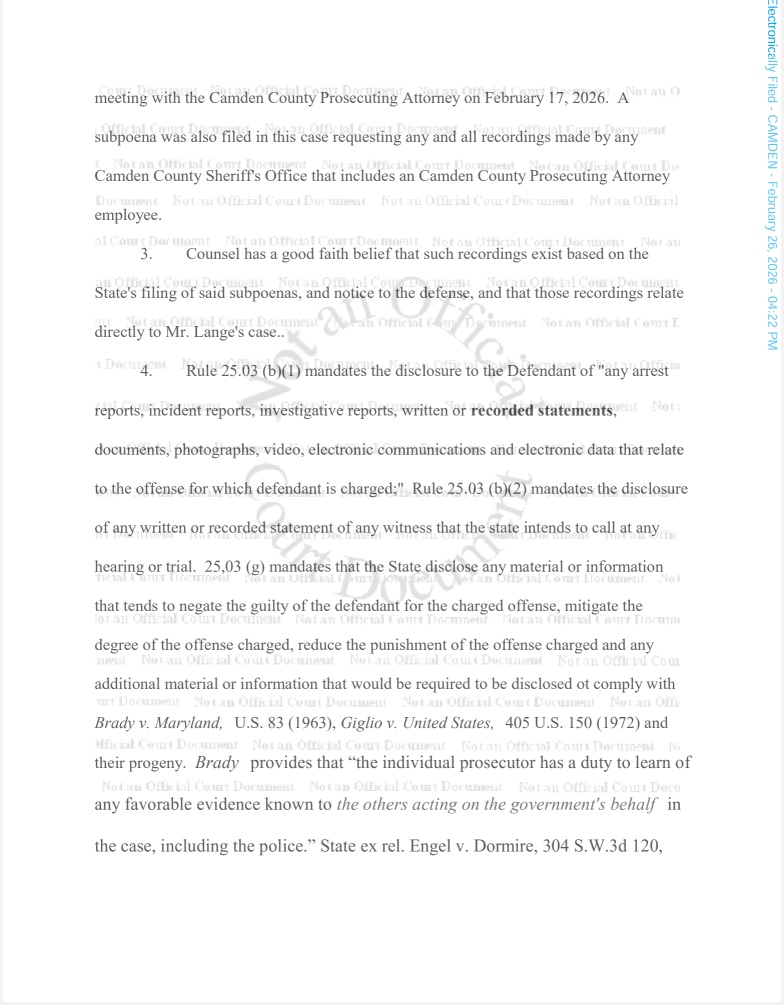
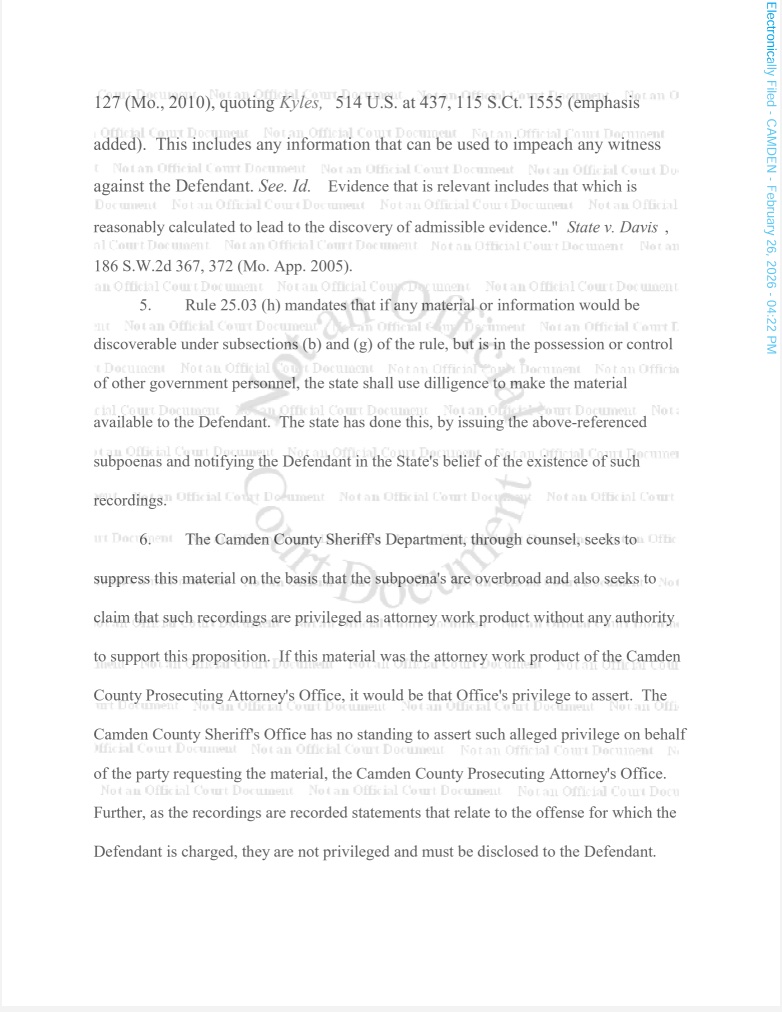
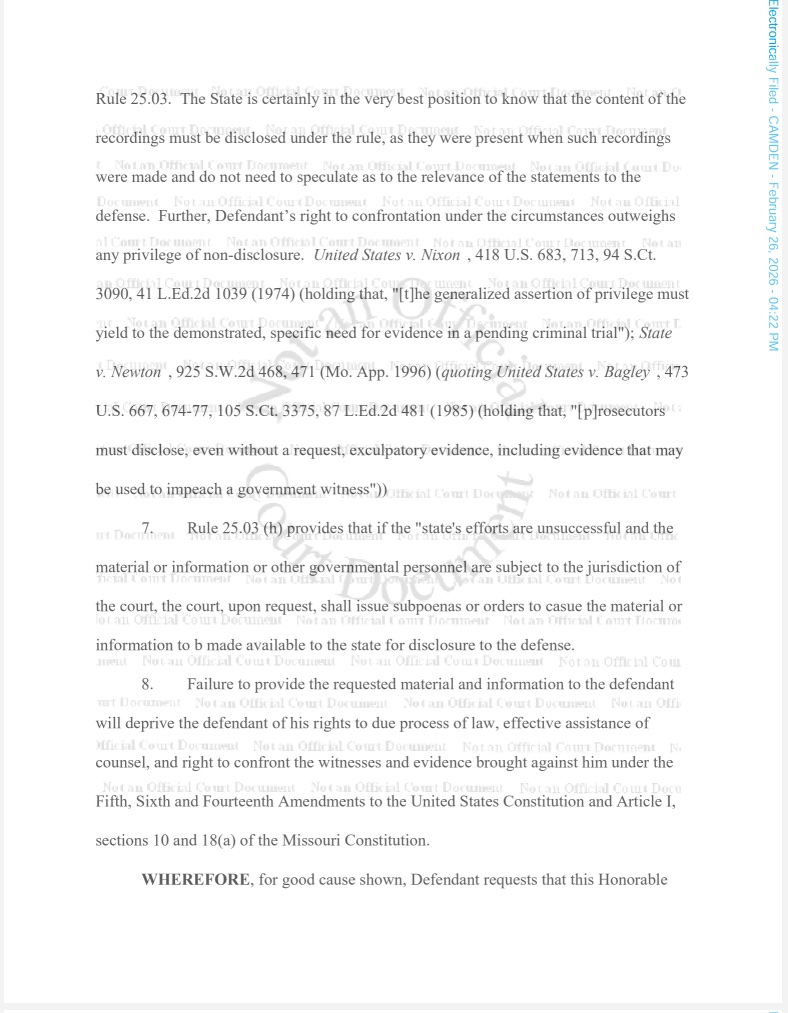
And then the Order to Quash. I have no idea why it talks about Heather Miller in the beginning:
 Among the Dogwoods
Well that was an interesting read. And everyone is keeping their job???
Jane Cunningham
LikeLike
So far? At my department, recording a prosecutor would have resulted in an immediate termination
LikeLiked by 1 person
No discipline as far as I know. Which tells you something.
LikeLike
Thank you for giving such an thorough examination of the issue. So, will this case even go to trial? Looks like this detective had poor training & oversight.
LikeLike
Good question. I guess it depends on what else is on the recording. The defense attorney will make arguments that she can use the recording during the trial.
LikeLike
I am a retired detective after serving over 3 decades with law enforcement agencies within the Los Angeles County area. During all my years, I too have NEVER heard of such a breach of trust (and outright stupidity). What the heck was this detective thinking!
LikeLiked by 1 person
Exactly. It’s nuts.
LikeLiked by 1 person
Thank you for the detailed analysis of what happened and what the consequences might be in the case and other cases!
I agree that such serious lack of judgment and the ramifications of those actions should have been dealt with immediate termination of the detective. By not doing so, the Sheriff himself is putting a bad light on himself and that of his department!
LikeLike